
Open Food › Targets, fill in About you and tap Save profile. The diary, the meal planner and the trends all measure against these numbers, so set them first.
Suggested targets
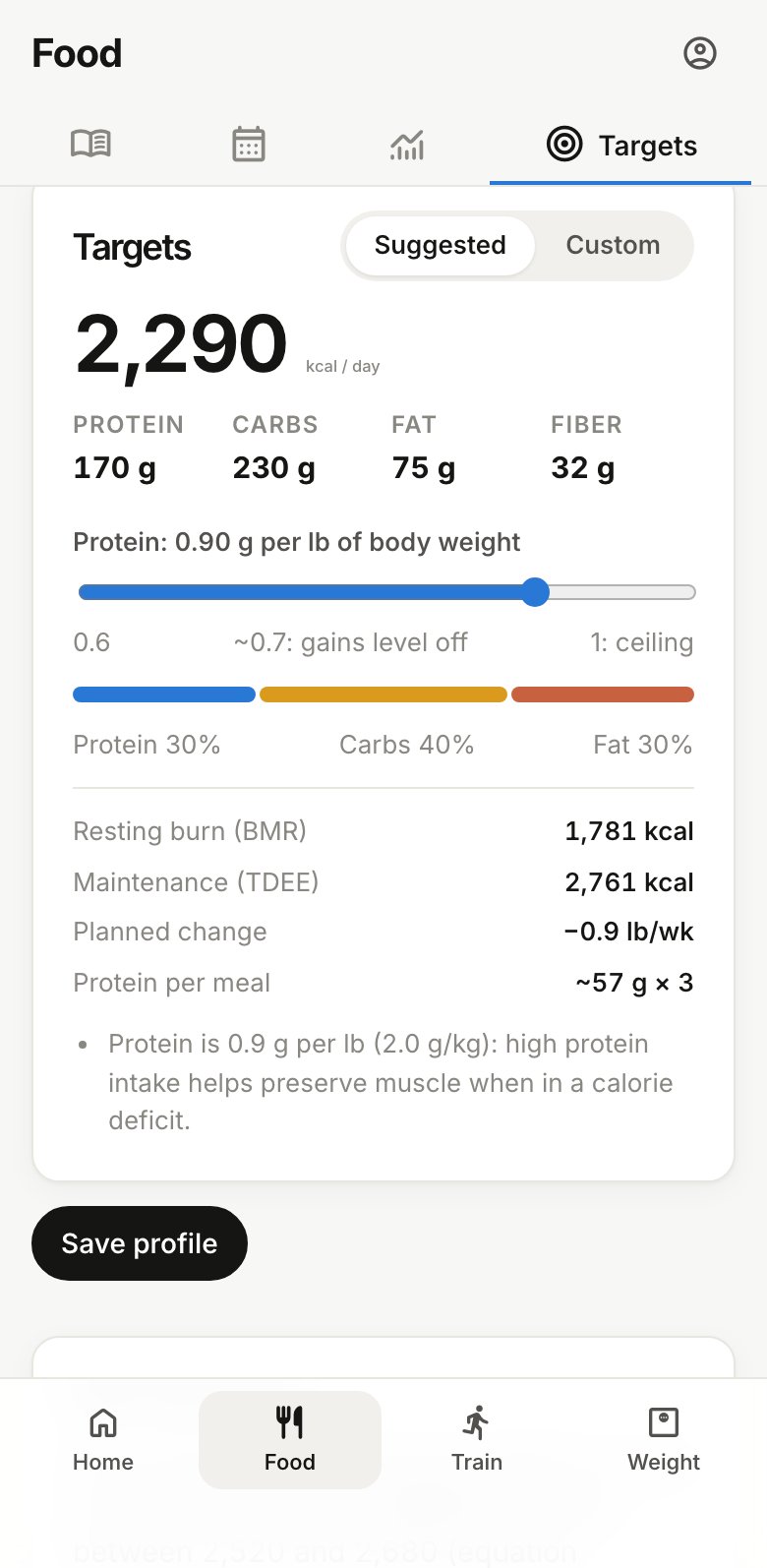
- Calories. Your resting burn comes from the Mifflin–St Jeor equation (the most accurate of the common ones), times your activity level, which gives your maintenance calories. Your goal then takes some away or adds some: losing fat at 0.25–1% of your body weight a week (starting at 0.5%), or gaining at 0.1–0.5% (starting at 0.25%), at about 3,500 kcal per pound.
- Protein. 0.9 g per pound of body weight when losing fat, 0.8 g otherwise. Move the slider anywhere from 0.6 to 1 g. Gains level off around 0.7 g per pound, and 1 g is about the most that helps.
- Fat is about 30% of calories, carbs fill the rest, and fiber is 14 g per 1,000 kcal.
Protein is split across your meals per day, because it works best spread out. The sources are listed at the bottom of the Targets page.
Setting your own numbers
Choose Custom and type in calories and grams. BodyWyse checks that the macros add up to your calories, and warns you if protein drops below 1.6 g per kg or calories go under your resting burn.
Maintenance from your own data
Equations describe an average person, so yours can be off by a few hundred calories. Once you’ve logged your whole day’s food on at least 20 of 28 days and weighed in a few times a week, Your own data works out your real maintenance: what you ate on average, minus what your weigh-ins say you stored or burned. It shows a likely range too, and leaves out days that look only partly logged.
The estimate is brought up to today for weight you’ve lost since and for changes in your steps and workouts. After a big change in how much you eat, it waits about two weeks for your weight to catch up before you can use it. Use this estimate turns it into custom targets for your goal. Check them and save.
What else your profile is used for
- Meals per day sets which meals the planner writes: lunch and dinner for 2, breakfast, lunch and dinner for 3, and snacks on top of those for 4 or more.
- Dietary notes are read by the meal planner: allergies, foods you don’t like, a budget, a kitchen with no oven. If they mention a cafeteria or dining hall, lunch and dinner start out as plates.
A meal plan is written for the targets you had when it was made. After changing them, replan the week to match.